Slipping on a Manduka Prolite yoga mat? Find the cause, clean it safely, adjust your practice, and know when grip loss means it's time to replace.
Most slipping on a Manduka Prolite yoga mat comes from moisture, surface residue, a dusty floor, or a rushed transition, not from a defective mat. Dry the surface fully, wipe away any film, check the floor beneath you, and note where your hands and feet actually slide before you spend money on a replacement.
That order matters. Cleaning and drying cost nothing and can be undone, while a new mat costs money and cannot be returned to its old condition. The checks below help you separate a maintenance problem from a technique problem, and they show you when grip loss is genuine wear rather than a thin layer of sweat.
Key Takeaways
Dry the mat, remove residue, and check the floor before assuming the mat itself has lost its grip.
The location of the slip, hands versus feet, narrows the cause to moisture, residue, surface wear, or technique.
Yoga blocks give you a steadier base and cut how much balance depends on a slippery surface.
Avoid unverified powders, solvents, abrasive treatments, and improvised grip products that may damage the mat or irritate skin.
Replace the mat when reduced traction persists despite cleaning, drying, and safer technique adjustments.
Why a Manduka Prolite Yoga Mat Can Feel Slippery
A closed-cell mat such as the Manduka Prolite sheds moisture instead of soaking it in. Sweat, hand lotion, and dust sit on top of the surface, and that thin film is often enough to break traction. The mat can be in good condition while the layer sitting on it is not.
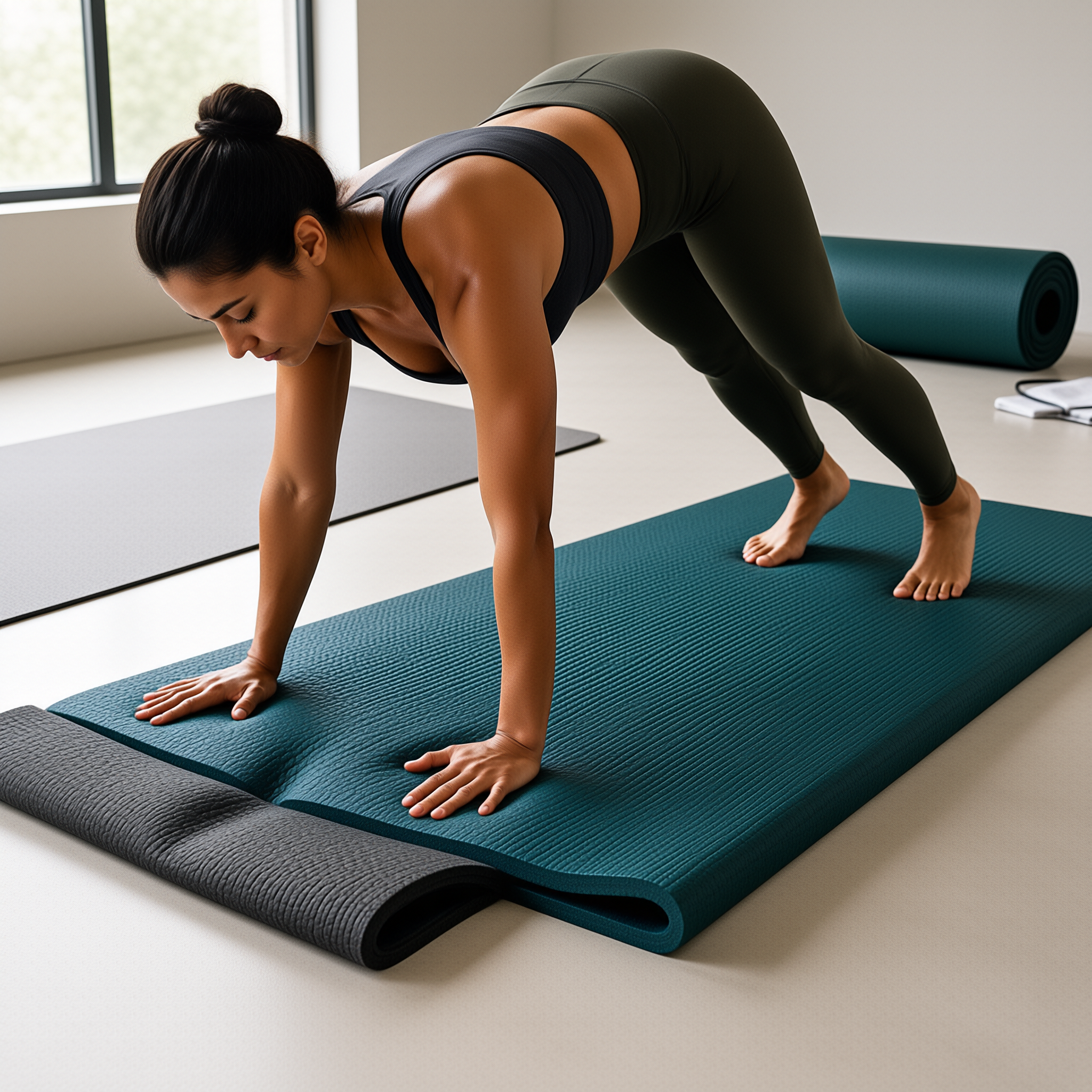
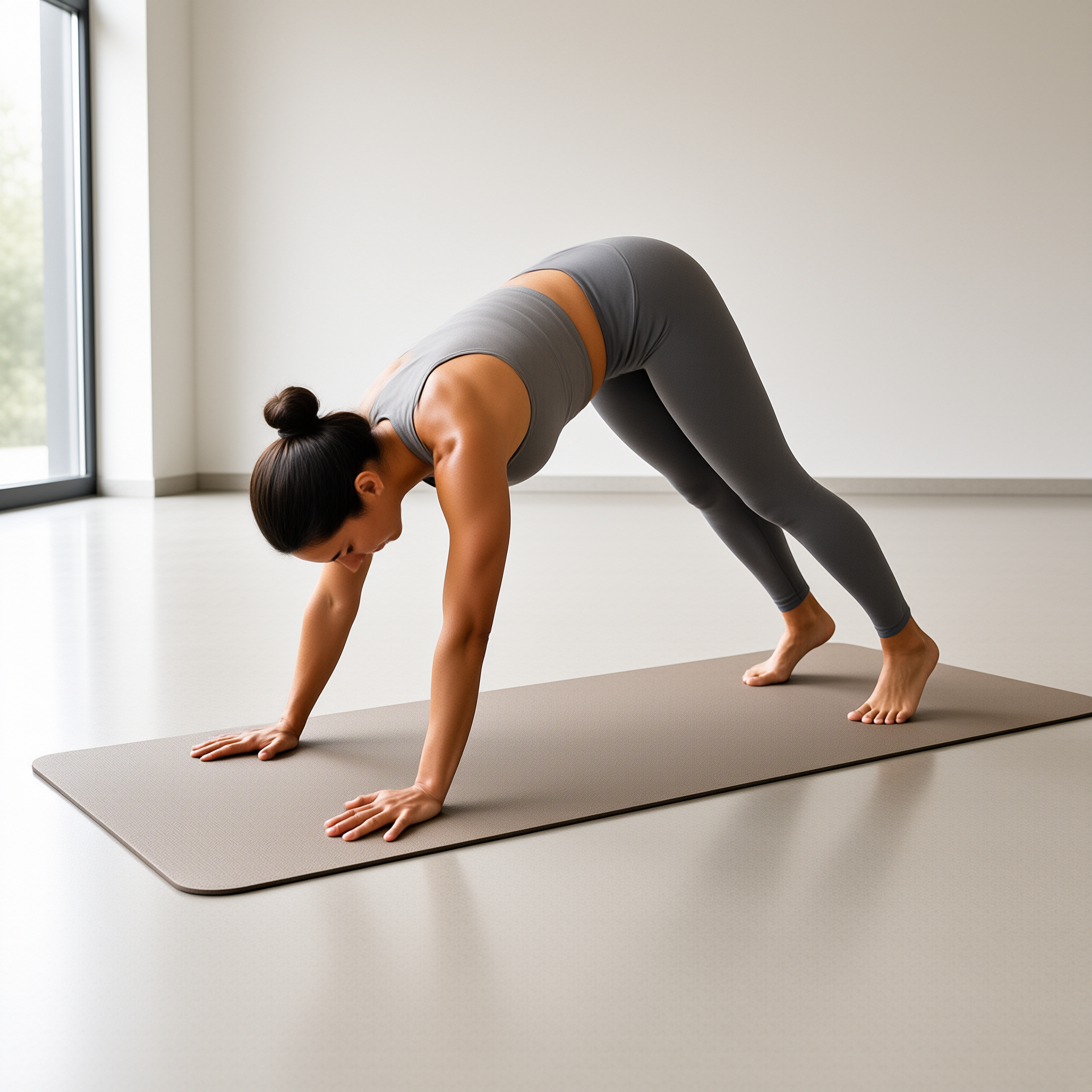
Slipping also has a location, and the location narrows the cause quickly. Hands that slide in downward dog or plank point to moisture or residue where you plant your palms. Feet that drift in standing balances more often point to dust, floor polish, or a rushed step. When only one pose fails, treat it as a single variable to test rather than a verdict on the whole mat.
| Where it slips | Likely cause | First check |
|---|---|---|
| Palms in downward dog or plank | Sweat or lotion film on the surface | Dry hands and mat, then retest |
| Feet in warrior or balance poses | Dust, floor polish, or grit underfoot | Clean floor and mat, test barefoot |
| Only during fast transitions | Pace and weight shift | Slow the entry and lower the load |
| Whole mat feels slick | Residue buildup on a closed-cell surface | Light damp wipe, then full air dry |
| Shiny or smooth patches | Surface wear over time | Inspect for cracks or peeling |
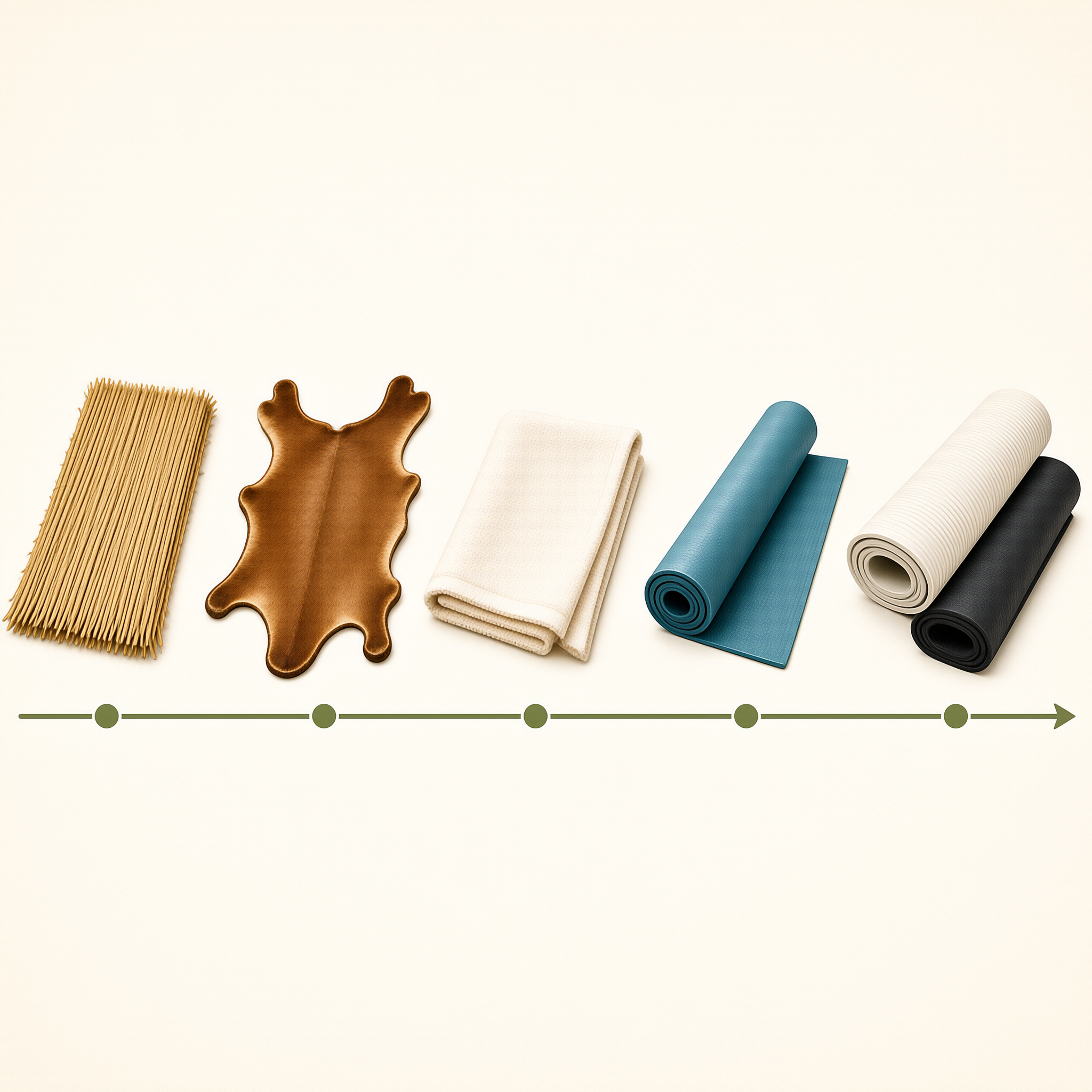
| Grip is one function among several, so it helps to understand how grip contributes to a yoga mat's function before you blame the material. If you are already shopping, use our guide to choosing a yoga mat by material, thickness, size, and grip rather than treating one specification as the whole answer. |
Start With a Dry, Clean Practice Surface
Start with the simplest correction. Unroll the mat after practice and let it air until the surface is fully dry. Before the next session, wipe visible moisture and small patches of residue with a lightly damp cloth, then let the surface dry completely before you step on it.
Skip soaking, harsh sprays, abrasive scrubbing, and solvent-based cleaners unless the manufacturer explicitly permits them. Those habits can dull the surface or leave a new film behind. For the full sequence, follow a complete yoga mat care routine and keep every step light.
Most slipping on a closed-cell surface starts with a thin film of moisture or residue, not with a worn-out mat.
The floor matters as much as the mat. Dust, floor polish, and damp tile all reduce friction under a closed-cell mat, and a mat that creeps during transitions is often sliding on the floor rather than under your hands. Clean the floor, let it dry, and check that the mat lies flat with no curled edges.
Improve Traction During Sweaty or Hot Practices
In a sweaty yoga practice, moisture builds faster than the surface can shed it. Start with dry hands and feet, and keep a small towel within reach. Pausing for two seconds to wipe your palms is faster than recovering from a slide in a standing balance.
Choose sequences that allow a stable reset instead of pushing through a slick transition. Step back rather than jump back when your hands are wet, and place the foot deliberately in each standing pose. Slow entries usually restore more grip than any accessory you can add mid-flow.
Simple adjustments often do more to make a yoga mat less slippery than any product you can buy.
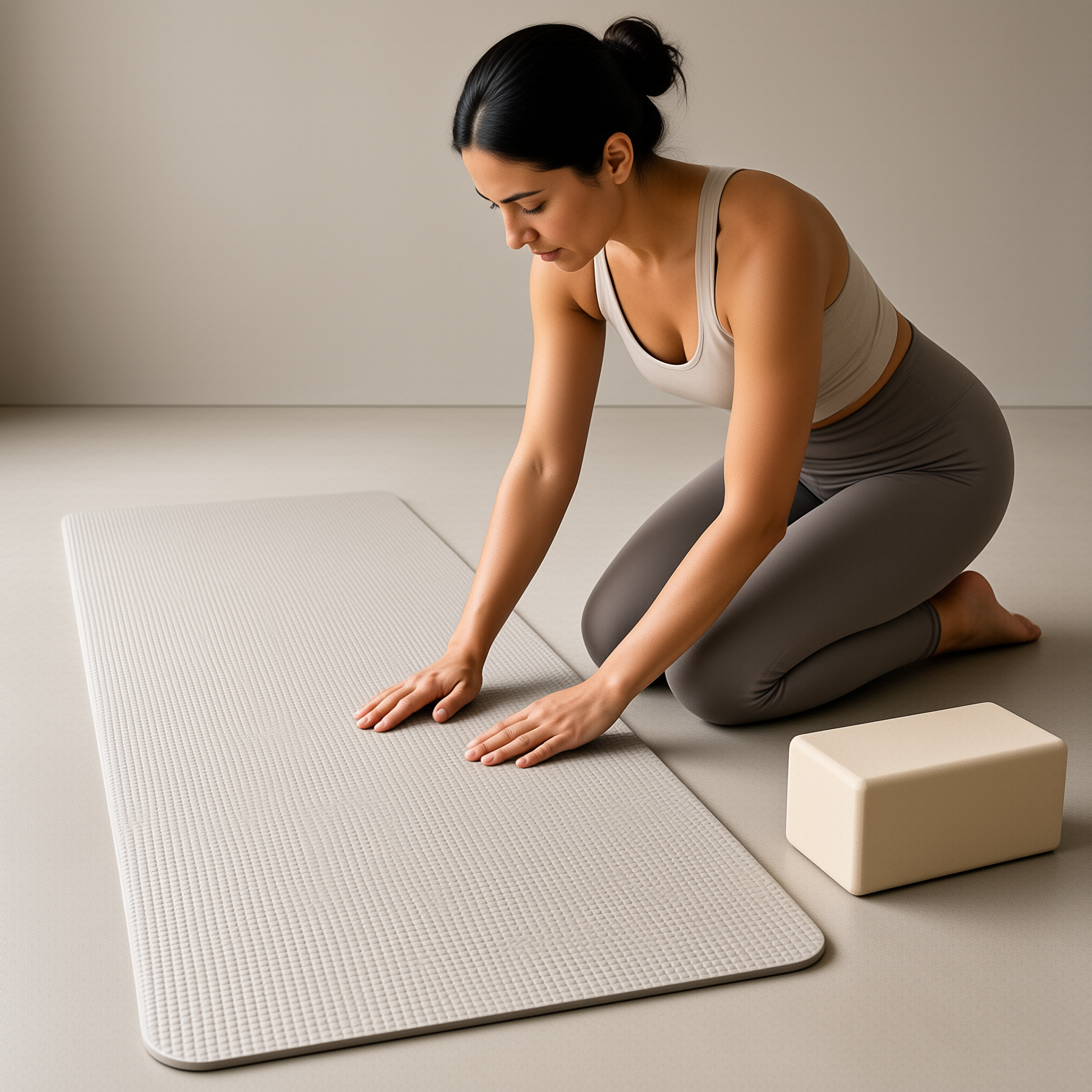
Yoga blocks give your hands a steadier base and reduce how much balance depends on a slippery surface. Use them under the hands in standing poses or lunges when the mat will not hold. A guide to essential yoga props can help you pick a height that keeps the pose honest.
Shorten or modify a pose whenever control is not there. A stable half expression beats a wobbling full one.
Avoid improvising grip aids. Powders, oils, and household sprays are unverified for closed-cell surfaces, and some irritate skin or leave residue that makes the next session worse.
Check the Mat, Floor, and Movement Pattern
Test several areas of the mat, not just the spot where you usually practice. If grip is poor in one corner only, residue or a floor issue is more likely than a worn surface. Widespread slickness across the whole mat points to buildup or wear.
Compare floors as a diagnostic, not as a ranking. Move the mat to a different clean, dry surface and repeat a simple pose. If traction improves, the floor was part of the problem. If nothing changes, look at the mat surface and your movement pattern.
Notice whether slipping repeats in one posture or shows up in nearly every transition. A single failing pose usually points to alignment, range of motion, or setup. Slipping in planks, down dog, and standing poses alike points to the surface. Fatigue and rushed transitions make both worse, so test when you are fresh.
If a pose fails only when you rush it, pace is the variable worth changing first.
When Cleaning Is Not Enough, Should You Replace the Mat?
Usually not, if the surface is intact and a cleaning routine restores traction. Replace the mat when slipping persists after drying, cleaning, and safer practice adjustments, or when the surface no longer gives dependable grip under load.
Look for persistent tackiness, peeling, uneven texture, cracks, or a surface that feels smoother than it once did. Do not use powders, abrasive treatments, sharp tools, or heat to restore grip. Those methods are unverified and can damage the mat or your skin.
Consider a different mat texture only after you have ruled out moisture, residue, flooring, and technique. In most projects, the first replacement decision is premature, because the old mat was never dried or cleaned properly. Fix the routine first and the buying decision gets clearer.
A Repeatable Grip Troubleshooting Routine
Run this sequence before your next session. It takes a few minutes and removes the most common causes in order.
Dry the mat and wipe away visible residue with a lightly damp cloth.
Inspect the practice area and clean the floor beneath the mat.
Begin with lower-load movements and test whether traction improves.
Use blocks or modify a pose when balance cannot be held safely.
Dry and store the mat fully after the session, then reassess any slipping that remains.
Persistent slipping is information, not bad luck. When a Manduka Prolite yoga mat keeps losing traction after drying, cleaning, and safer adjustments, the surface has told you what it can and cannot do. Replace it then, and keep the routine that got you there.
- Why does my Manduka Prolite yoga mat feel slippery even when it is dry?
- Dry skin and a dry mat can still carry a thin film of oil, lotion, or dust. Wipe the surface with a lightly damp cloth, let it air dry completely, and retest in a low-load pose before assuming the material has failed.
- Should I use a grip spray or powder to stop my yoga mat from slipping?
- Be careful, because many sprays and powders are unverified for closed-cell surfaces and some leave residue that makes the next session worse. Follow the manufacturer's care guidance and test any product on a small corner first.
- Can yoga blocks make a slippery mat safer to use?
- Yes. Blocks give your hands a stable base and reduce how much balance depends on a slick surface. They are a support tool, not a repair for grip loss.
- How should I dry a Manduka Prolite yoga mat after a sweaty practice?
- Wipe visible moisture, then air dry it flat or draped loosely in a ventilated space. Avoid direct sun, radiators, and folding it while damp.
- What cleaning products are safe for a closed-cell yoga mat?
- Check the current product-care guidance for your mat before choosing anything. A lightly damp cloth handles most residue, and harsh sprays, solvents, and abrasive scrubbing are best avoided unless the maker permits them.
- Is a slippery Manduka Prolite yoga mat still safe to use?
- Only if you can hold poses with control. If your hands or feet slide in standing poses, shorten the pose, use blocks, or stop and clean the surface first.